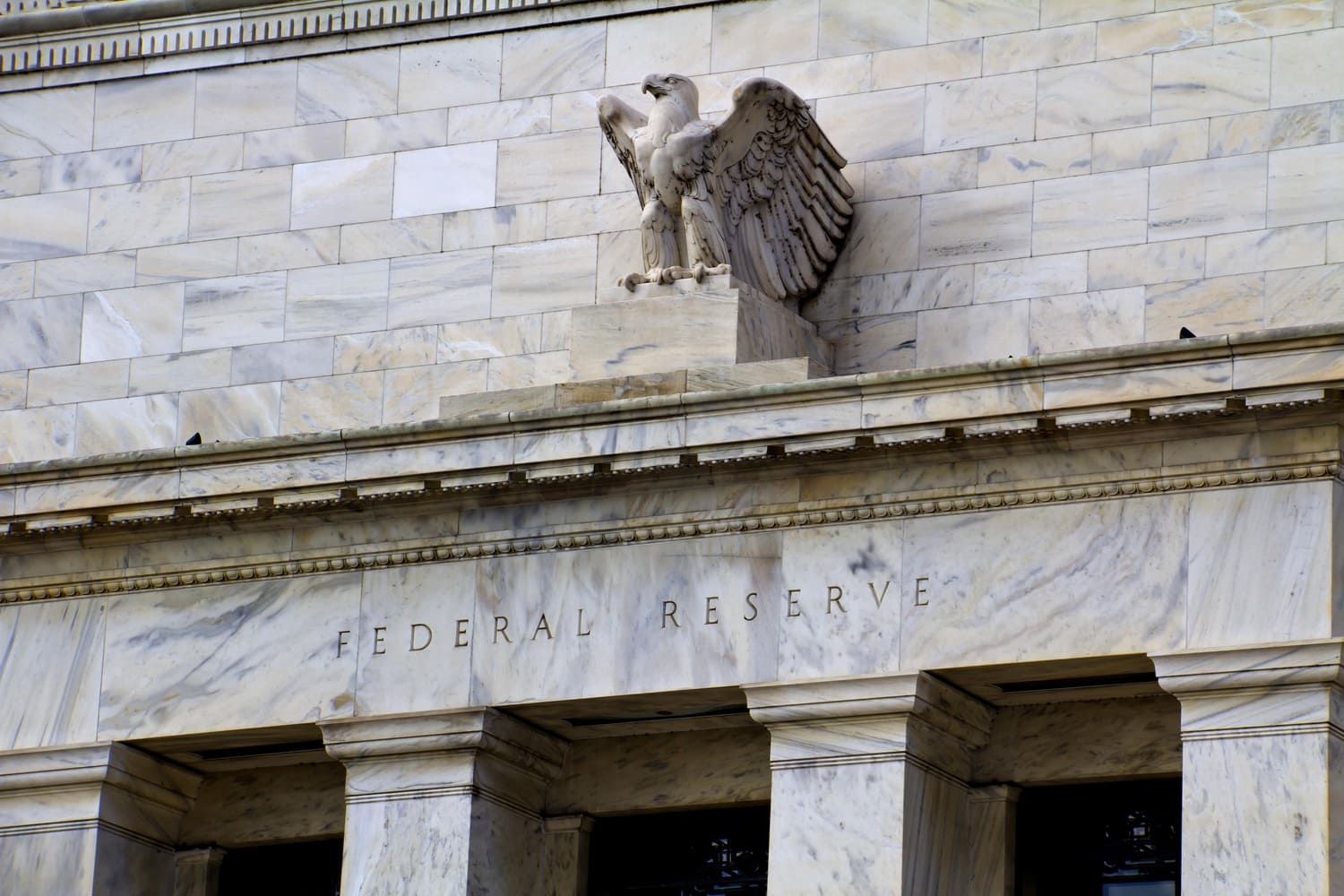

You are probably aware that the government protects your deposits at your bank through something called the FDIC. However we get a lot of questions about the details: How does the protection work exactly? Who pays for it? Does this protection extend to my investment accounts? Could President Donald Trump make changes to FDIC insurance?
Here we’re going to cover what the FDIC is, how it works, and what some proposed changes could mean for you.
Why is deposit insurance so important?
Do you remember the movie Mary Poppins? At one point in the story, Michael visits the bank one day where his father, Mr. Banks, works. Michael has some money that he plans to use to buy seed to feed the birds. But his father and the bank president strongly protest and tell him to open a bank account with the money instead. When he refuses to open an account, a scuffle ensues, giving the appearance that the bank is refusing to give Michael his money. This scares other customers in the bank and suddenly they are all demanding to withdraw their money. The ensuing panic causes the whole bank to collapse.
Now of course, that was a fictional story, but the concept of a banking panic is very real. When you deposit money in your bank, the bank does not simply store your money in the vault. Functionally the bank has borrowed the money from you, and it will use your money however it sees fit. Typically either investing your money or lending it out.
Because of this, no bank ever has enough money on hand to return all customer deposits at once. In other words, if enough people demand to withdraw their deposits in a short period, the bank simply won’t have the money available. This could be enough to drive any bank out of business, even if otherwise it was perfect healthy.
FDIC origins
Between 1930 and 1933, more than 9,000 banks failed. Of course, this was the onset of the Great Depression, so in many cases banks were in dire straits due to loans going bad. However, in at least some cases, it was the mere rumor that a bank was troubled led to customer panic.
Today this is sometimes called the “Mary Poppins Effect.” That is to say, there were probably many banks that would have survived but for sudden customer withdrawals. Moreover, the more banks that failed, the more fearful customers became. Fear itself became a major destabilizing force in the banking system.
The Federal Deposit Insurance Corporation or FDIC, was founded during this banking panic of the 1930’s. The idea was that by providing government insurance for depositors, bank customers would be less likely to panic and rush to withdraw funds. This in turn could help banks weather difficult economic periods.
Today, any deposit at an FDIC insured bank up to $250,000 is protected. Even if your bank were to suddenly collapse, you are guaranteed to get at least this $250,000 limit back. If you have more money at that one bank it is not explicitly covered, with some exceptions. Most commonly, different ownership categories, such as a joint account.
There is wide agreement among economists and historians that the introduction of FDIC insurance has greatly helped maintain stability in the banking system. For example, even though many banks failed during the 2008 Financial Crisis, no depositors under this FDIC limit actually lost money. This helped stabilize the banking system more quickly. Deposit insurance is probably a major reason why the 2008 recession only lasted about 18 months compared to the 12 years of the Great Depression.
Who pays for the FDIC?
As we said in the intro, often people think of their deposits as being protected by the “government.” That is true in a sense. FDIC insurance is considered “full faith and credit” of the U.S. government. This means that the full U.S. government backstops the FDIC no matter the circumstances.
However that isn’t the whole story. The FDIC does not actually get any funds from the Treasury or Congress. Rather, it operates like a traditional insurance company. The FDIC charges banks a premium (or a fee) in exchange for providing deposit insurance. In the U.S., all federally chartered banks are required to have FDIC insurance, and virtually all state-chartered banks do as well.
This money the FDIC collects sits in what is called the “Deposit Insurance Fund” and is invested in Treasury securities. When a bank fails, any payments to that bank’s customers come out of this fund.
The insurance fund has run out of money twice in the past, most recently in 2009. In that case, the FDIC borrowed from the Federal Financing Bank to continue protecting depositors. They also raised insurance premiums on banks, which allowed the FDIC to repay any borrowings and replenish the insurance fund.
The key thing here is that the FDIC insurance does not cost tax payers anything. It doesn’t get any appropriations from Congress, and doesn’t rely on the Treasury for its day-to-day operations. Banks themselves fund everything the FDIC does through the insurance premiums they pay. In this sense, the banking system itself pays for its own protection.
What about investment accounts? What is the SIPC?
One question we often get asked a lot is whether investment accounts have any similar protections? Most people hold their investments at a brokerage firm, whether they are stocks, bonds or funds. What happens if that brokerage collapses? Are there similar protections as the FDIC?
A brokerage account is very different from a bank account. As we discussed above, when you deposit money at a bank, the bank does not just keep that money. In fact, the bank owes you your money back. Hence why having some kind of protection like FDIC is so key.
With a standard investment account, the brokerage does in fact keep your money separate from the company’s money. There are some exceptions to this, like if you use margin, prime brokerage accounts or securities lending programs. However, even in these relatively unusual situations, the activities are much more narrow compared to a typical bank. Therefore the risks are substantially lower.
What if my brokerage firm fails?
So generally speaking, if a brokerage firm fails, your money is still sitting in that same account. It is actually still invested in whatever securities you bought. In fact, usually the brokerage firm itself is not bankrupt, usually it is the brokerage’s parent company, often called a “holding company” that actually goes into bankruptcy. This structure is specifically designed to protect brokerage customers.
For example, when Lehman Brothers collapsed in September 2008, it was “Lehman Brothers Holdings” that was actually bankrupt. Lehman’s brokerage unit was explicitly not part of the bankruptcy filing and kept operating. The U.S. brokerage was sold to Barclays by the bankruptcy court two days later. So had you had a regular brokerage account at Lehman Brothers in 2008, you simply would have found yourself suddenly a customer of Barclays. None of your money would have disappeared in the bankruptcy.
What is SIPC insurance? SPIC vs. FDIC
The Securities Investor Protection Corporation (or SIPC) does have some surface-level similarities to the FDIC. SIPC is an insurance pool, and it was created to provide protection to brokerage customers. However in practice, because the risks of brokerage accounts are totally different, the protection provided is also totally different.
Since brokerage firms do not use your money like a bank does, it is rare that there are large losses for SIPC to protect. Typically what the SIPC does is help sort out operational issues, such as money transfers or trades that were in process but not completed when the brokerage firm failed. If somehow there is a loss that occurs related to these events, the SIPC will make the brokerage customer whole up to $500,000. SIPC also may help facilitate a sale of the bankrupt firm’s brokerage unit.
Importantly SIPC doesn’t protect investors from market related losses. SIPC will help restore any missing securities, but if the market declines, so will the value of your account.
Again, on the surface SIPC and FDIC may seem similar, which does lead to some confusion. As a practical matter, however, they are totally different. FDIC is a critical protection for your bank account. For your brokerage account, the fact that your money is segregated is the critical protection. SIPC is very much secondary.
Could Trump eliminate the FDIC?
After the November 2024 election, there were some reports that President Trump could look to eliminate the FDIC. As of the time this is being published, there have been no formal proposals to actually close the FDIC, which would take an act of Congress. However, we could see some circumstances where changes may be coming to the FDIC.
However we should emphasize that what is reportedly being considered is not eliminating FDIC insurance, but rather eliminating the FDIC office.
Currently the FDIC not only administers the deposit insurance program, but also does a lot of bank regulation. Over the years both Republicans and Democrats have criticized the fact that there are >several different bank regulators. This creates inconsistencies, may even allow a bank to “shop” for the most friendly government regulator.
The Trump Administration, and in particular Elon Musk’s DOGE team, have talked a lot about streamlining and/or eliminating regulations. It would make sense that overlapping bank regulators could come under scrutiny by Trump and Musk. That could create some effort to merge the various bank regulators, which in turn could cause some of them to be eliminated. The FDIC office could therefore be threatened.
However it is important to separate this from the FDIC insurance fund. We could imagine the administration of deposit insurance being moved inside the Treasury Department, perhaps in the name of increasing efficiency. In a sense that might eliminate the FDIC, but wouldn’t be a practical change in deposit insurance.
Here it is important to remember that the deposit insurance program doesn’t cost taxpayers any money. It is also quite popular, and virtually every economist would say it is a critical tool for economic stability. There would be no meaningful support in Congress to actually eliminate deposit insurance.
Remember what FDIC is and what it isn’t
Deposit insurance is a critical protection for your traditional bank account. However, remember that this is because of the special nature of how banks operate. When it comes to other kinds of accounts you may have, be sure to think through how the risks might be different. Feel free to talk to your planner about any concerns you may have.