
It's easy to get caught up in the numbers or feel pressured by what society says success looks like. If you've ever felt that your bank account doesn't quite reflect who you are or what you care about, you aren't alone. We believe that money is deeply personal, and understanding your own relationship with it is the first step toward a life that feels as good as it looks on paper.
From coconuts to crypto: A brief history
Money is, at its core, a medium of exchange. It all started 11,000 years ago with coconuts and bananas. Someone needed coconuts, and someone else needed bananas, so they struck a deal. These goods and services were swapped at an agreed-upon value, marking society's first form of money.
Fast forward to today, and the landscape looks very different. We now have paper money, credit cards, Venmo, PayPal, and even digital and programmable money. While the form money takes has changed drastically over the years (imagine trying to explain crypto to one of our early ancestors, let alone our grandparents), the underlying meaning hasn't actually changed.
The truth is that there are two distinct meanings of money, and understanding them can change how you view your entire financial roadmap.
The two distinct meanings of money
Societal influences
Society has placed a heavy cultural significance on money. It conveys status, fame, power, intelligence, and other attributes to the people who have it. But in reality, money is just a tool that can create opportunities for people who use it correctly. It enables us to travel, buy necessities, invest in others, and build bridges to new ideas.
Personal influences
The second and less discussed meaning of money is personal. It's part psychology (how we think about it), part utility (how we use it), and part subjectivity (personal choice). We hold the power to define the meaning of money in our lives. It reflects our beliefs and values. Ultimately, it's not what we have; it's what we do with it that matters.
Your personal relationship with wealth
Money is an incredibly personal and emotional topic. What money means to us is a complex web of experiences with friends and family, the communities in which we live, and what our cultures say about money and wealth. These factors all affect our beliefs, values, and attitudes, forming the foundation for the meaning we place on it.
Here is how different motivations shape that meaning:
- If we feel more comfortable when we have money, it's security.
- If money allows us to take care of family, it's love.
- If it allows us to be active in our communities, it's service and impact.
- If it helps us achieve well-being, it's power.
While history has placed specific meanings on money, we still hold the power in this relationship. With the right mindset, we can give money meaning by using it as a tool to help us live well.
The two roles money should play in your life
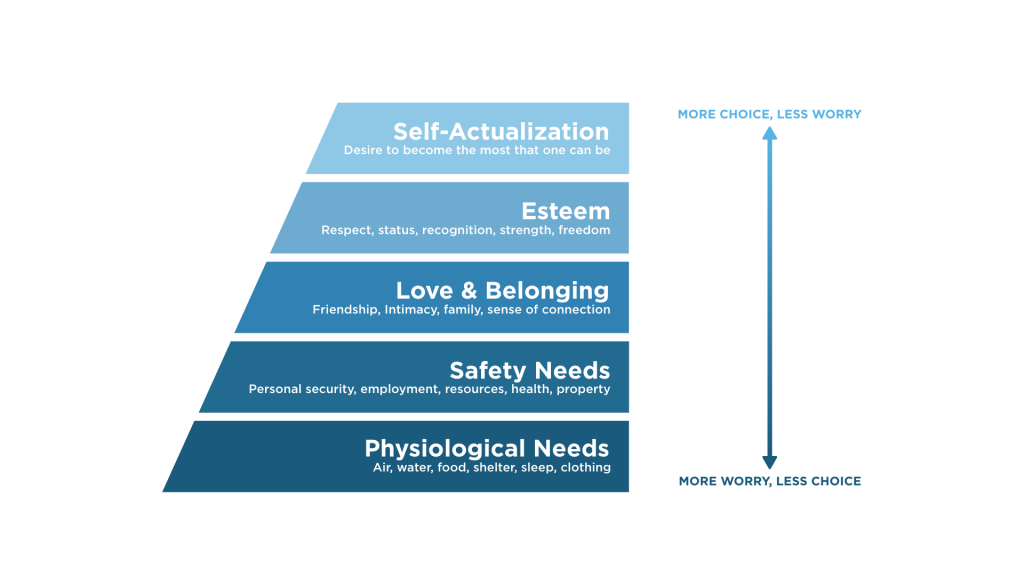
Famed psychologist Abraham Maslow may be right that we're all searching for what he calls self-actualization - the best version of ourselves. However, we can't satisfy the higher levels of our human needs if we can't provide the basic necessities and create a feeling of security.
So, what role does money play in all of this? There are two primary roles it should fill.
Role #1: Freedom from worry
Money can lay the foundation for the essentials in life and give us the security to strive for more. Creating freedom from worry allows us to give money a higher meaning beyond just survival.
Role #2: Power of choice
The best way to live life is with the power of choice-to feel in control, to have the ability to do what we love, and to spend time with those that matter most to us. This is the power to choose what meaning we will give to our money.
How to align your money with your life
You have the opportunity to define what you value and what brings meaning to your life. Once you define these values, you can create a roadmap that aligns your money with the life you want to live. This is where your money will get its true meaning.
While self-actualization sounds like something you can only achieve through transcendental meditation or during a trip to Burning Man, we can all strive for things that have meaning to us. This includes successful careers, providing for those we love, and giving back to our communities. And yes, we can do all that while having a little (or a lot) of fun, taking nice vacations, and drinking a few adult beverages (or Kombucha) along the way.
Integrating your money and your life
The key to giving meaning to money is understanding that money (and your planning for it) should integrate into every facet of your life. That roadmap should define what you want to achieve, help you make informed and confident decisions, and put you in control.
If you aren't quite sure about the meaning of life - that's OK because neither are we - you can start with a strategy for the next few years. It's not what you have that gives meaning to money; it's what you do with it. The real power is the power of choice, which puts you in control of the life you want to live.
To explore this concept further, ask yourself these questions:
- If money wasn't an issue, how would you spend your time?
- What feelings about money do you want to hold on to?
- What feelings about money do you want to reshape?
Why Facet’s approach is different
At Facet, we believe financial planning isn't just about investment returns; it's about helping you live well. As an SEC-registered investment advisor and fiduciary, we are legally bound to act in your best interest. Our membership-based model means we don't charge commissions, so our advice is objective and focused on your well-being.
Whether you need help with retirement planning, tax strategy, or equity compensation, we pair you with a CFP® professional to build a comprehensive roadmap that integrates every aspect of your financial life. We help you move beyond the societal pressure of "accumulation" and focus on the personal power of "choice".