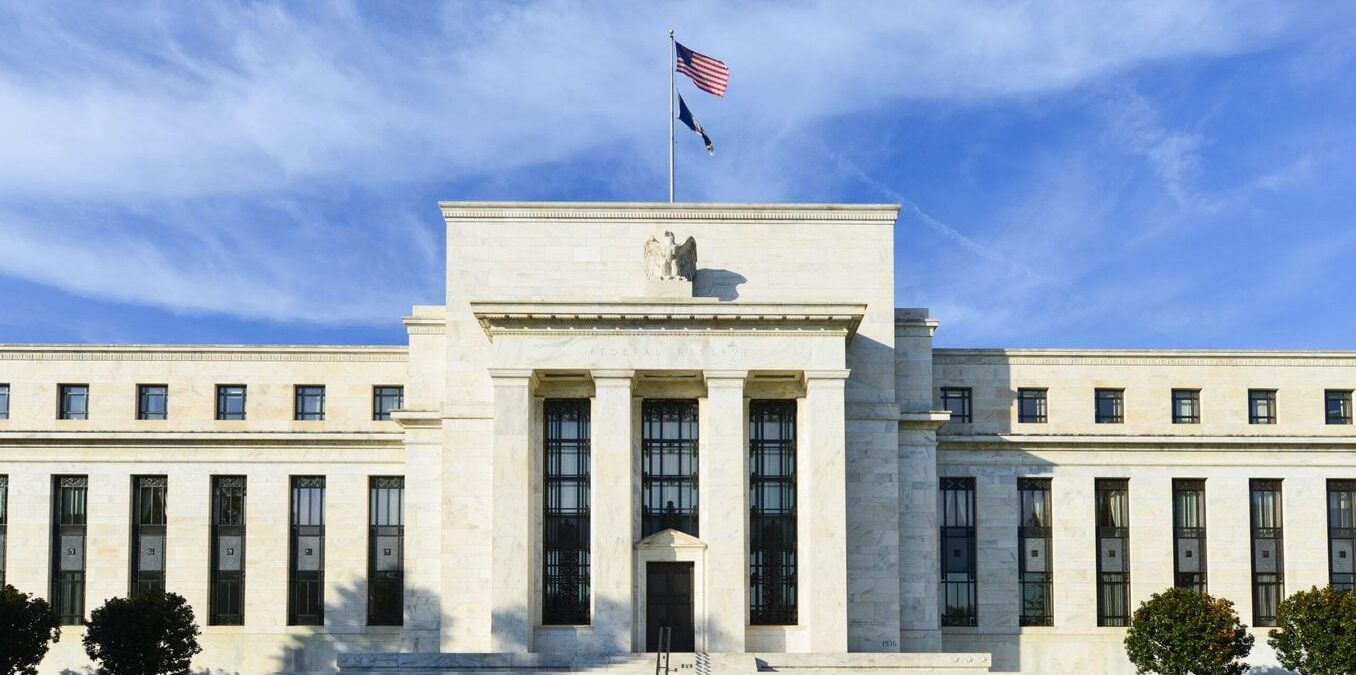
The Federal Reserve made no changes to its interest rate target during the May 7 meeting, as was widely expected. This meeting comes at a difficult time for the Fed. The economy seems to be slowing, but tariffs are very likely to deliver a bout of inflation this summer. Meanwhile, President Donald Trump is putting public pressure on the Fed to start cutting rates now. Here is our take on what happened at this meeting, and what comes next for the Fed.
The Fed’s tariff problem
Total income in the U.S., as measured by Gross Domestic Product (GDP), declined in the first quarter. It was the first quarterly contraction since 2022. There are other signs the economy may be faltering, including weak business activity surveys, and falling consumer confidence. In his opening remarks, Fed Chair Jerome Powell mentioned that there was currently “elevated uncertainty” to the economy.
Normally this is a time when the Fed would at least consider cutting rates.
The problem is that the reason why there is this “elevated uncertainty” is tariffs, and as Powell put it, tariffs are “likely to generate a rise in inflation, a slowdown in economic growth, and an increase in unemployment.”
It’s very difficult for the Fed to be cutting rates during a period of rising inflation, even if it’s believed that inflation will be temporary.
Expectations matter
Economists generally agree that part of keeping inflation under control is related to expectations. If businesses expect inflation to be high, they will be more apt to raise prices. This can create a self-fulfulling prophecy, where high inflation expectations actually create high inflation. This is why you often hear Fed officials talk about keeping inflation expectations “anchored” around 2%. At this meeting, Powell noted that indicators like the implied inflation rate from the Treasury Inflation Protection Securities market show that the public still believes inflation will be close to 2% over the long-run.
One of the reasons why inflation expectations remain anchored is that the public believes the Fed is committed to a 2% inflation target. In other words, it’s widely expected that if inflation were to be high for some period, the Fed would hike rates, slow the economy, and eventually get inflation under control.
If the Fed were to cut in the face of rising inflation, it would put this reputation at risk, which in turn would risk inflation expectations becoming unanchored. Safeguarding that reputation is extremely important to the Fed. During the presser Powell said that keeping expectations anchored was the key to preventing a “one-time increase in the price level from becoming an on-going inflation problem.”
For this reason, it’s basically impossible for the Fed to start cutting rates until either inflation peaks and starts subsiding, or the economy shows signs of a clear recession. More on this in a moment.
Political pressure likely not helping
President Donald Trump has been putting public pressure on the Fed to start cutting rates now. Trump said in a recent interview that it was the “perfect time” to cut rates, and has previously called Powell “Mr. Too Late” for waiting to cut rates.
In a sense, this public pressure makes it harder for the Fed to cut rates. When economists talk about the risks of inflation expectations becoming unanchored, they often point to former Fed Chair Arthur Burns. It’s generally agreed that Burns was unwilling to hike interest rates during a period of high inflation for fear of causing unemployment to rise. This may have been in part due to Burns’ cozy relationship with then President Nixon.
Politicians generally want a stronger economy to help them get elected, and may not care about keeping long-term inflation expectations anchored. This is why the Fed was set up to be independent of either Congress or the White House. As Trump dials up the pressure, the Fed will be compelled to prove their independence. If the public thinks the Fed Chair will bend to the will of politicians, it would rapidly erode that long-term inflation fighting reputation that the Fed views as so important.
Powell was asked about this pressure, and he said that it “does not affect our job or the way we do it.” He insisted that the Fed will do what is best for the economy, regardless of what the White House says.
Tariff inflation is likely to be temporary
That being said, it’s likely that the inflationary effects of tariffs will be temporary. Powell himself mentioned this during his press conference after the May meeting, referencing a “one-time” increase in prices. Other Fed officials have echoed this view, including Governor Chris Waller.
The idea is that companies are likely to raise prices in the coming weeks, but they’re less likely to keep raising prices. Therefore the rate of inflation probably peaks sometime during the summer and subsides from there. For example, one respected research firm, Capital Economics, projects that inflation will peak at 4%. To get to that peak by July or August, it implies that all prices rise about 2% over the next 3-4 months. If we assume those price increases are concentrated in physical goods (i.e., the kind that tends to trade across borders), that implies price increases will be around 6% over that period.
We do not think this burst of inflation will last, however. That is not to say that prices will go back down. Rather the pace of price increases won’t continue at an elevated pace. In order to get continuously high inflation, you need consumer spending to increase. In order for consumers to spend more, household income needs to rise. As we argued in our article on stagflation, there’s no reason to think tariffs will increase household income. If anything, tariffs are more likely to slow the economy, increase unemployment, which would actually reduce household income in the aggregate.
The more tariffs slow the economy, the faster the rate of inflation will subside. This could open the door for the Fed to cut rates later this year.
Rate cuts depend on extent of slowdown
The timing and extent of rate cuts is difficult to predict right now. If the economy were to show more acute signs of stress, such as negative job growth, it might be enough to convince the Fed to cut more quickly. In other words, if it becomes obvious a recession is imminent, the Fed might become convinced that inflation will fall rapidly enough that there’s no real reputational risk to cutting sooner.
However right now a recession isn’t obvious at all. The April job growth figure was a fairly healthy +177,000. Meanwhile, Trump keeps saying that more trade deals are likely to be reached, which could ameliorate the longer-term impact of tariffs. The Fed doesn’t want to cut prematurely and potentially risk creating an inflation problem themselves.
We see two paths for the economy going forward. We know that right now firms are pulling back on spending. This is in response to the uncertainty wrought by tariffs generally, but also the constant changes to Trump’s plan. This moving target of tariff levels makes it hard for companies to make long-term decisions, and when that is the case they tend to spend less, hire less, etc.
From here, it’s likely that the tariff plans will become more firm. In other words, we are probably getting close to a point where Trump’s tariff program will be more or less determined. As we’ve said many times, tariffs are generally harmful to economic growth, but once companies know what they’re dealing with, they can plan around the increased cost of importing.
It’s possible that this increased certainty revives business spending. Perhaps it comes at a slower pace than would have been true without tariffs, but not so damaged as to cause a recession. In other words, economic growth is lower than it would have been otherwise, but still solidly positive.
The other scenario is one where business spending slows so much that it reverberates through the economy. Perhaps companies assume that the tariffs might go away completely at some point, and choose to keep production light waiting for that moment. In that scenario, a recession is much more likely.
These will be the signs the Fed will be watching in the coming months. If the economy muddles through, there may be no rate cuts at all, but if the recession scenario comes to fore, expect the Fed to get aggressive cutting rates toward the end of the year.